Tehran/Jerusalem: Fresh military exchanges between Iran and Israel have intensified fears of a wider regional conflict, placing an already fragile ceasefire under severe strain and raising concerns about renewed instability across the Middle East.
Iran’s Islamic Revolutionary Guard Corps (IRGC) announced early Monday that it had launched missile strikes against Israel’s Nevatim and Tel Nof airbases. The attacks were described as retaliation for Israeli air raids carried out overnight against radar and military installations inside Iran.
Shortly after the Iranian barrage, the Israeli military confirmed that multiple missiles had been detected crossing into Israeli airspace. Air defense systems were activated as authorities assessed the situation.
Israel Targets Iranian Military and Energy Infrastructure
Earlier on Monday, Israeli forces said they conducted strikes against several targets within the petrochemical complex in Mahshahr, located in southwestern Iran. The operation followed previous attacks on military facilities across the country.
Iranian media reported explosions in several major cities, including Tehran, Tabriz, and Isfahan, as tensions escalated between the longtime adversaries.
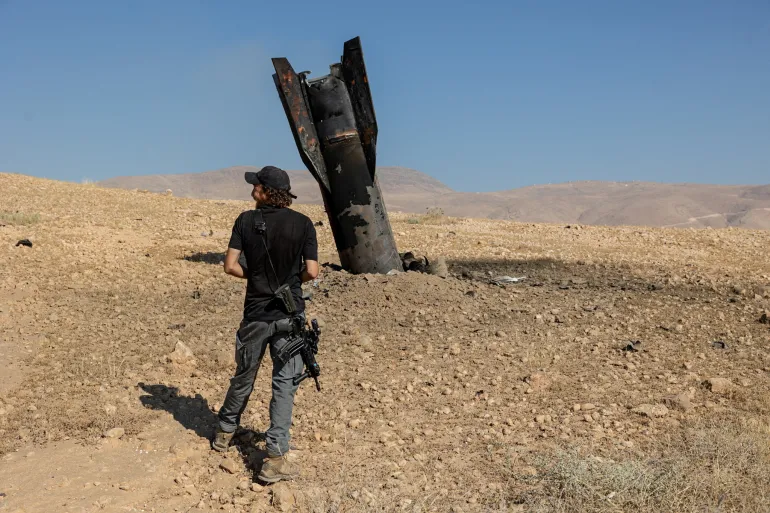
The latest exchange follows an Iranian missile attack on northern Israel on Sunday. Israeli authorities reported no casualties from that attack, but it marked the first direct Iranian strike on Israel since a ceasefire agreement involving the United States and Israel was reached in April.
Yemen’s Houthis Join Escalation
Adding another layer to the crisis, Yemen’s Iran-aligned Houthi movement announced that it had launched a missile salvo targeting Israel.
The group also declared plans to prohibit Israeli maritime navigation through the Red Sea, threatening one of the world’s most strategically important shipping routes and increasing concerns over regional trade disruptions.
Beirut Attacks Sparked Latest Confrontation
The latest flare-up was triggered by Israeli airstrikes on Beirut’s southern suburbs on Sunday. Israel said the operation targeted positions linked to Hezbollah, the Lebanese group backed by Iran.
The strikes were significant because they marked the first attacks on the Lebanese capital since Washington announced an extension of the Lebanon ceasefire arrangement last week.
Iran strongly condemned the operation, arguing that any ceasefire agreement involving Tehran also requires an end to Israeli military actions in Lebanon.
IRGC Central Command spokesperson Ebrahim Zolfaghari accused the United States of effectively giving Israel approval to carry out attacks on Beirut.
Ceasefire and Regional Diplomacy Under Pressure
Since the Iran-US ceasefire began, Israel has continued military operations in southern Lebanon and expanded areas under its control, claiming it is targeting Hezbollah fighters responsible for launching rockets and drones into northern Israel.
The ongoing operations have become a major point of contention between Tehran and Washington, which have been engaged in discussions over extending the ceasefire framework and reducing regional tensions.
Negotiations have also focused on reopening the Strait of Hormuz, a vital global energy corridor that Iran blocked after joint US-Israeli military operations against Iranian territory earlier this year.
Oil Prices Surge Amid Renewed Conflict
Financial markets reacted quickly to the escalating military confrontation.
Following the exchange of missile strikes, Brent crude oil prices surged above $97 per barrel as investors worried about potential disruptions to Middle Eastern energy supplies and maritime trade routes.
Analysts warn that prolonged hostilities could further destabilize global energy markets and increase inflationary pressures worldwide.
Trump Reportedly Presses Netanyahu for Restraint
In an effort to prevent a broader regional war, US President Donald Trump reportedly held a phone conversation with Israeli Prime Minister Benjamin Netanyahu on Sunday evening.
According to multiple US media reports, Trump urged Netanyahu to avoid further military escalation against Iran.
While neither leader immediately released details of the discussion, the reports suggest Washington is actively seeking to preserve the ceasefire framework and prevent a wider conflict.
Netanyahu has not publicly commented on the latest military exchanges. However, Israeli media outlets reported that he planned to convene an emergency security cabinet meeting on Monday morning to assess developments.
Hardline Voices Call for Escalation
Despite diplomatic efforts, hardline figures in Israel and Iran continue to push for stronger responses.
Israeli National Security Minister Itamar Ben-Gvir posted a blunt message on social media, declaring, “Tehran must burn,” reflecting growing pressure within parts of the Israeli political establishment for a tougher stance.
Meanwhile, Iranian officials have repeatedly warned that continued Israeli military operations in Lebanon and elsewhere could trigger broader retaliation.
Trump Says Negotiations Will Continue
Speaking to the Financial Times, President Trump insisted that the latest hostilities would not derail ongoing negotiations with Iran.
“I call the shots. I call all the shots. He doesn’t call the shots,” Trump said, referring to Netanyahu.
In a separate interview with Fox News, Trump revealed that he had personally advised the Israeli leader against retaliatory military action following Iran’s missile attacks.
As diplomatic efforts continue alongside military confrontations, regional observers warn that the coming days could determine whether the Middle East returns to large-scale conflict or remains on a fragile path toward de-escalation.