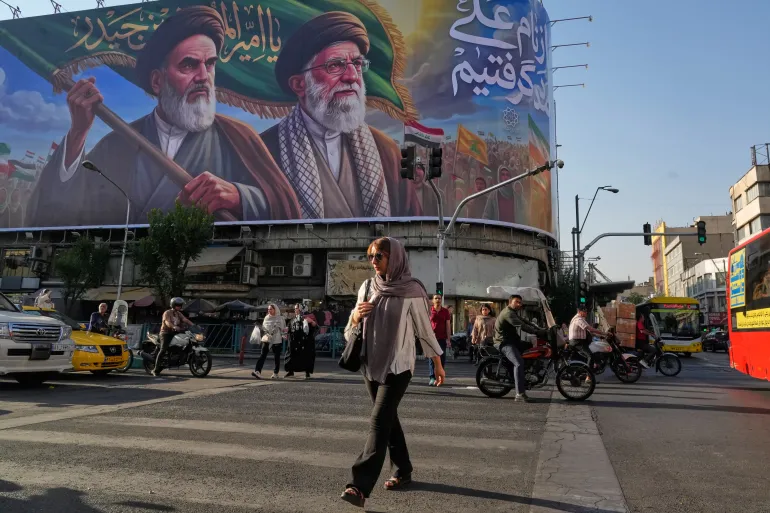
Tehran/Beirut: Growing tensions between Lebanon and Iran have underscored Lebanon’s increasingly important role in maintaining a fragile regional ceasefire involving Iran, Israel, and the United States.
The diplomatic dispute intensified after Iran condemned an Israeli strike on an alleged Hezbollah facility in southern Beirut, a move widely viewed as crossing a sensitive red line for Tehran. In response, Iran launched a barrage of missiles toward Israel on Sunday. Israel retaliated on Monday with strikes targeting Tehran and several other Iranian cities, raising fears that the two-month ceasefire between Iran and the United States could collapse.
Southern Lebanon Remains a Flashpoint
Regional tensions had already escalated after Israeli forces crossed the Litani River last month. Israel has designated the area as a buffer zone that should be cleared of Hezbollah fighters, a position rejected by many in Lebanon. The Lebanese government subsequently called for an end to foreign interference and military actions on its territory.
Reports last week suggested that US President Donald Trump persuaded Israeli Prime Minister Benjamin Netanyahu to avoid targeting Beirut directly, warning that such a move could jeopardize the broader regional ceasefire established in April.
The ongoing Israeli military campaign in southern Lebanon has further strained relations between Tehran and Beirut. While Iran continues to support Hezbollah politically and militarily, the Lebanese government has increasingly emphasized its goal of maintaining exclusive state control over weapons and security matters.
Aoun Calls for Negotiations
Lebanese President Joseph Aoun has urged all parties to pursue diplomacy rather than military confrontation.
“There is no way to end the conflict except through negotiation and diplomacy,” Aoun said, criticizing Tehran for allegedly treating Lebanon as a bargaining tool in its discussions with Washington.
Aoun also stressed that Hezbollah must engage in dialogue, as Beirut seeks to advance direct talks between Lebanese and Israeli officials in Washington aimed at easing tensions and preventing further escalation.
Iran Rejects Lebanese Criticism
Iranian Foreign Minister Abbas Araghchi responded sharply to Aoun’s remarks, suggesting the Lebanese president was overlooking Israel’s actions in Lebanese territory.
“Had Lebanon been a bargaining chip for Iran, we would have reached a deal long ago. Save Lebanon from your real enemy,” Araghchi wrote on social media, in an apparent reference to Israel.
The exchange reflects a widening disagreement between Beirut and Tehran over how to address the ongoing conflict. Hezbollah has opposed direct negotiations with Israel and has advocated for a larger Iranian role in any future mediation efforts.
Fragile Ceasefire Under Pressure
The current conditional ceasefire between Lebanon and Israel, brokered by Washington and negotiated without Hezbollah’s direct participation, includes provisions requiring armed groups to withdraw from areas south of the Litani River.
The agreement also proposes the creation of pilot security zones in southern Lebanon where the Lebanese Army would exercise sole authority, strengthening state control in historically contested regions.
Analysts warn that the situation remains highly volatile.
Negar Mortazavi, a senior fellow at the Center for International Policy in Washington, said attacks on Beirut’s southern suburbs, known as Dahiyeh, could trigger a major escalation.
“Tehran has so far tolerated attacks in southern Lebanon as part of a complicated ceasefire arrangement,” she noted. “But the current stalemate cannot continue indefinitely. The region is likely headed either toward renewed conflict or a more comprehensive peace agreement.”
Iran Links Lebanon Conflict to Wider Negotiations
Iran has repeatedly indicated that any long-term understanding with the United States will depend on ending Israel’s military operations in Lebanon.
According to analysts, Tehran views Hezbollah as a key regional ally whose interests are closely connected to Iran’s broader strategic objectives.
The continued Israeli military presence in southern Lebanon has also generated frustration among hardliners inside Iran, many of whom believe the government should respond more aggressively.
Iranian political commentator Abbas Abdi recently argued that symbolic displays of support for Hezbollah were insufficient and called for stronger measures to deter Israel.
Hardliners Demand Stronger Action
Iranian officials and commentators have increasingly framed the conflict as part of a broader campaign to weaken Iran’s regional influence.
Political analyst Mostafa Najafi argued that Israeli operations in Lebanon and US pressure on Iran are interconnected efforts designed to limit Tehran’s strategic reach.
“The pressure being applied in Lebanon is not only directed at Hezbollah,” Najafi said. “It is aimed at weakening Iran’s regional leverage and geopolitical influence.”
Meanwhile, hardline lawmaker Amirhossein Sabeti claimed that Washington is temporarily avoiding a larger confrontation and warned that Iran should prepare for future escalation.
He urged Iranian authorities to adopt a more proactive deterrence strategy, arguing that Tehran should not wait for attacks before responding.
Regional Stability Hangs in the Balance
As clashes continue and diplomatic tensions rise, Lebanon remains at the center of a complex regional crisis involving Iran, Israel, Hezbollah, and the United States. While Beirut pushes for negotiations and greater state authority, Tehran continues to view developments in Lebanon as closely tied to its broader strategic interests.
With ceasefire arrangements increasingly fragile and military exchanges continuing, analysts warn that the coming weeks could determine whether the region moves toward renewed conflict or a broader diplomatic settlement.
This version is optimized for news portals with SEO-focused headings, improved readability, balanced tone, and keyword-rich structure around Iran, Lebanon, Hezbollah, Israel, ceasefire, and regional tensions.